01What the Body Is Saying
Dogs communicate in layers. The tail is the obvious one, but a wagging tail doesn't simply mean happy — a high, stiff wag signals arousal or tension, while a low, loose wag is the relaxed greeting most of us picture. A tail tucked between the hindquarters signals fear or submission; one held straight out, barely moving, often means a dog is intensely focused and worth giving space.
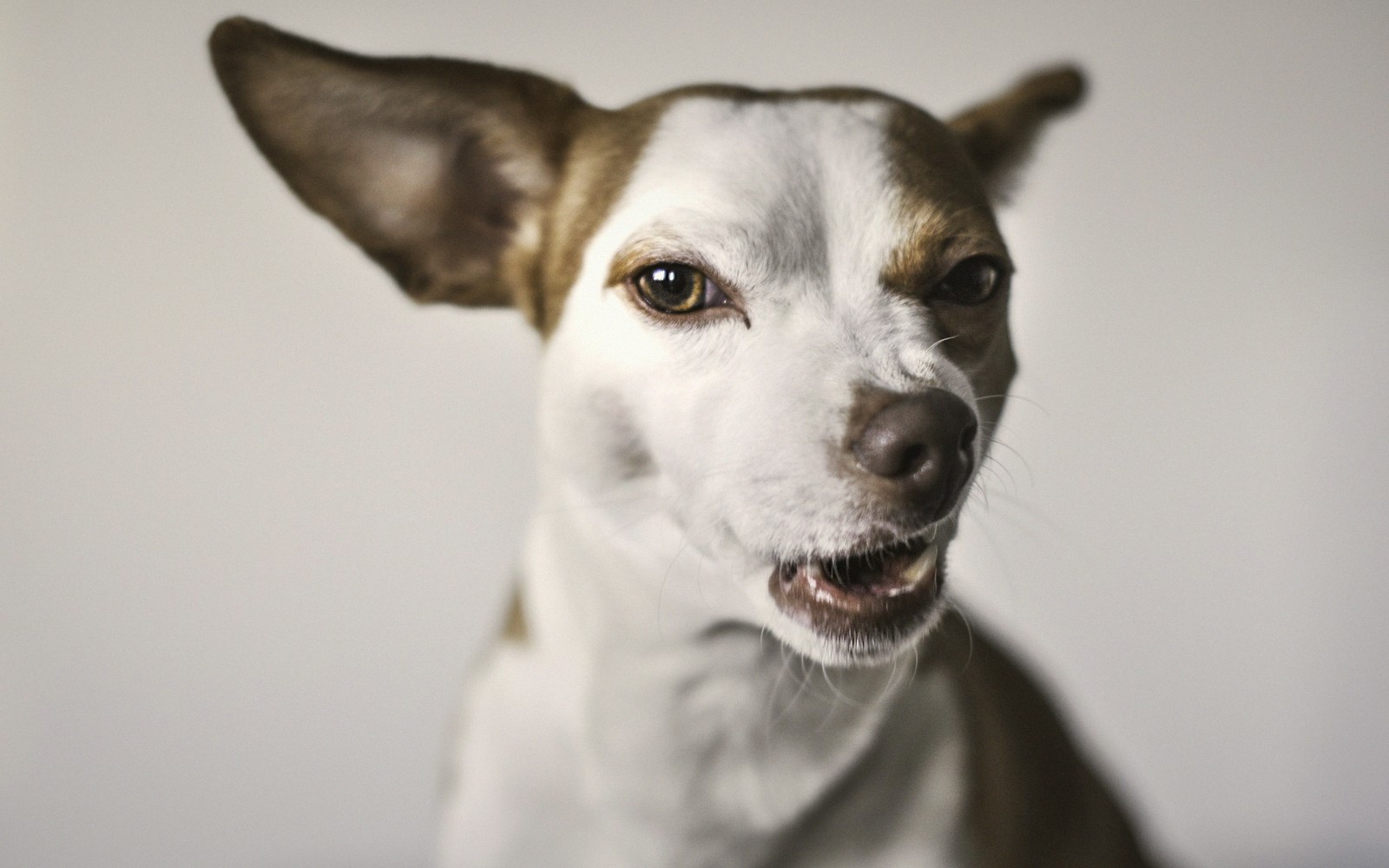
Ears tell a similar story. Ears forward and raised mean alertness or curiosity. Pinned flat against the skull usually means the dog is frightened or, in some cases, offering appeasement — essentially saying please don't hurt me. Soft, slightly back ears are the sweet spot: a calm, comfortable dog.
Posture does the heavy lifting. A dog leaning forward with weight on the front feet is engaged and possibly pushing toward something; leaning back or crouching low is avoidance. Play bow — front legs stretched forward, hindquarters up, often bouncy — is one of the clearest signals in the canine vocabulary: this is fun, I'm not a threat. A dog rolling onto their back for a belly rub is offering trust; a dog that suddenly freezes in that position, body stiff, is not — it's a stress response and the belly rub should stop.
Eyes matter too. Soft, slightly squinty eyes mean ease; wide, hard eyes with the whites showing (sometimes called "whale eye") mean discomfort. A hard, unblinking stare between unfamiliar dogs — or toward a person — is a warning sign. Slow blinking, by contrast, signals calm.
The critical habit is reading combinations, not single signals. A loose body, open mouth, soft eyes and low ears together paint a clear picture. One tense signal amid relaxed ones might just be curiosity. Multiple tense signals together — stiff body, high tail, whale eye, forward lean — means back off and give the dog room to decompress.
Once you start reading the whole dog, you'll catch the conversation well before it ever gets to a growl.