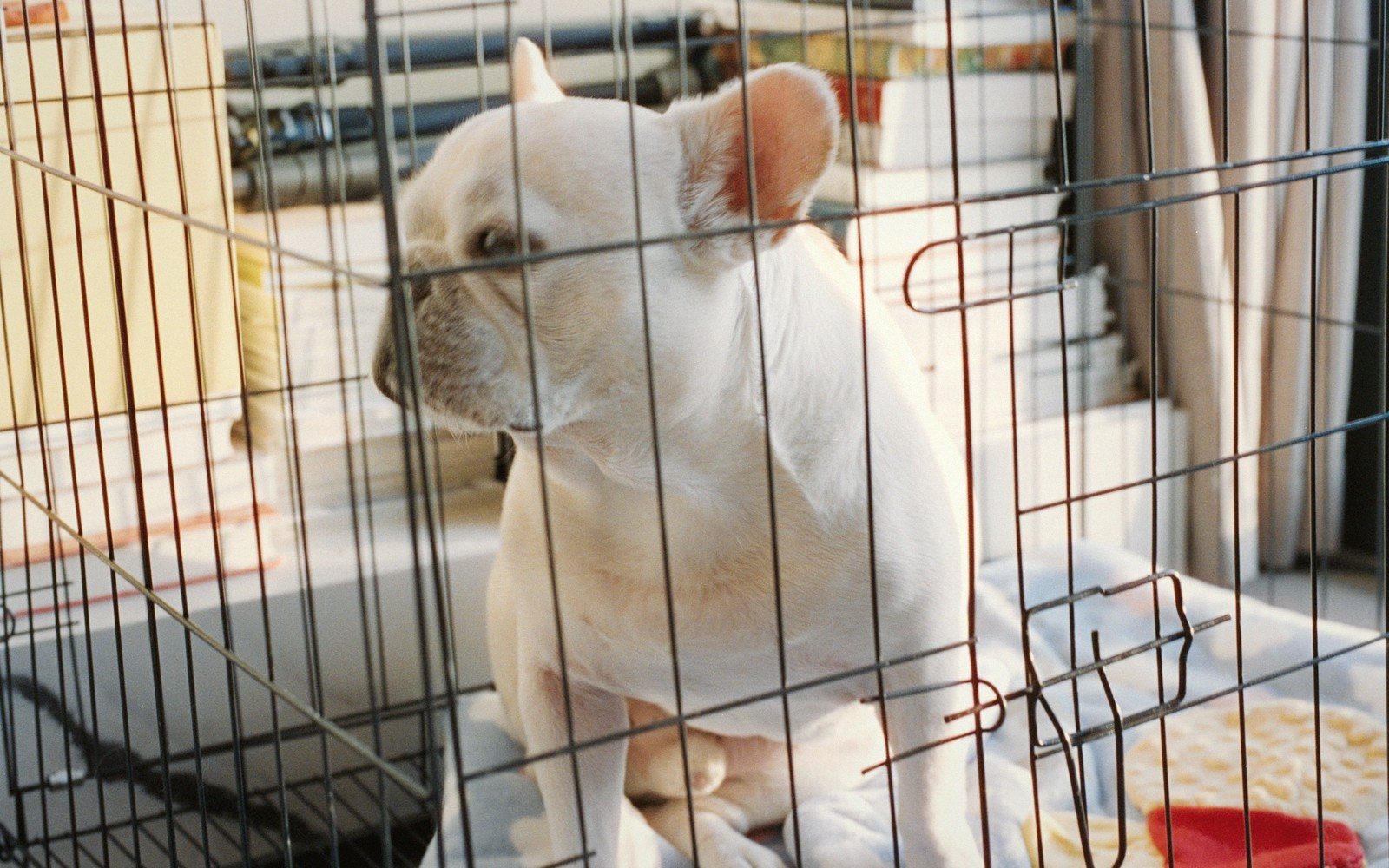
01Make the Crate a Good Place First
Before a single rule is taught, the crate needs to feel like a den, not a detention cell. Put it somewhere the family actually spends time, toss in a worn t-shirt that smells of you, and let the puppy wander in and out freely for a day before you ever close the door. Feed meals inside it. Drop treats near the back. The goal is a dog who trots in willingly — that foundation makes every step after it easier.
Size matters more than most people expect. A crate just big enough to stand, turn and lie down is what you want. Too much space and a corner becomes a toilet; the right fit triggers the instinct to keep the sleeping area clean, which is exactly what you're relying on.
02The Routine That Actually Works
House training runs on one rule: prevent accidents, reward success, repeat until it's habit. Puppies need to go outside first thing in the morning, after every meal, after every nap, after any excitement, and last thing at night. That's a lot of trips — eight to ten a day is normal in the early weeks — but each successful outdoor toilet is a deposit in the bank. Praise the moment they finish, not when they're halfway back inside.
Between outings, the crate is your friend. A puppy who is in the crate or directly supervised cannot make a mistake. When you can't watch — really watch, not glance at occasionally — crate them. Keep sessions short: very young puppies can hold it for roughly one hour per month of age, up to a maximum of around four to five hours during the day. Longer than that isn't fair to ask.
A puppy who is in the crate or directly supervised cannot make a mistake.
When an accident happens indoors — and it will — clean it up without drama. Enzyme-based cleaners1 remove the scent that draws a dog back to the same spot; ordinary surface sprays don't. Scolding after the fact teaches nothing useful; the connection between the act and your reaction has already dissolved.
Nights get easier faster than you'd think. A tired puppy — a good walk or a solid play session before bed — will settle sooner. Set an alarm for a middle-of-the-night trip in the first week or two if needed; it beats a 3 a.m. accident and a crate that now smells wrong.
By the four-week mark, most puppies are showing real reliability. The accidents thin out, the crate door stays open more, and one day you realise you haven't thought about it in hours. That's the whole point.
Notes from the keeper
- Enzyme cleaners break the odour molecules down; ordinary sprays only mask them from you, not from the dog. ↩