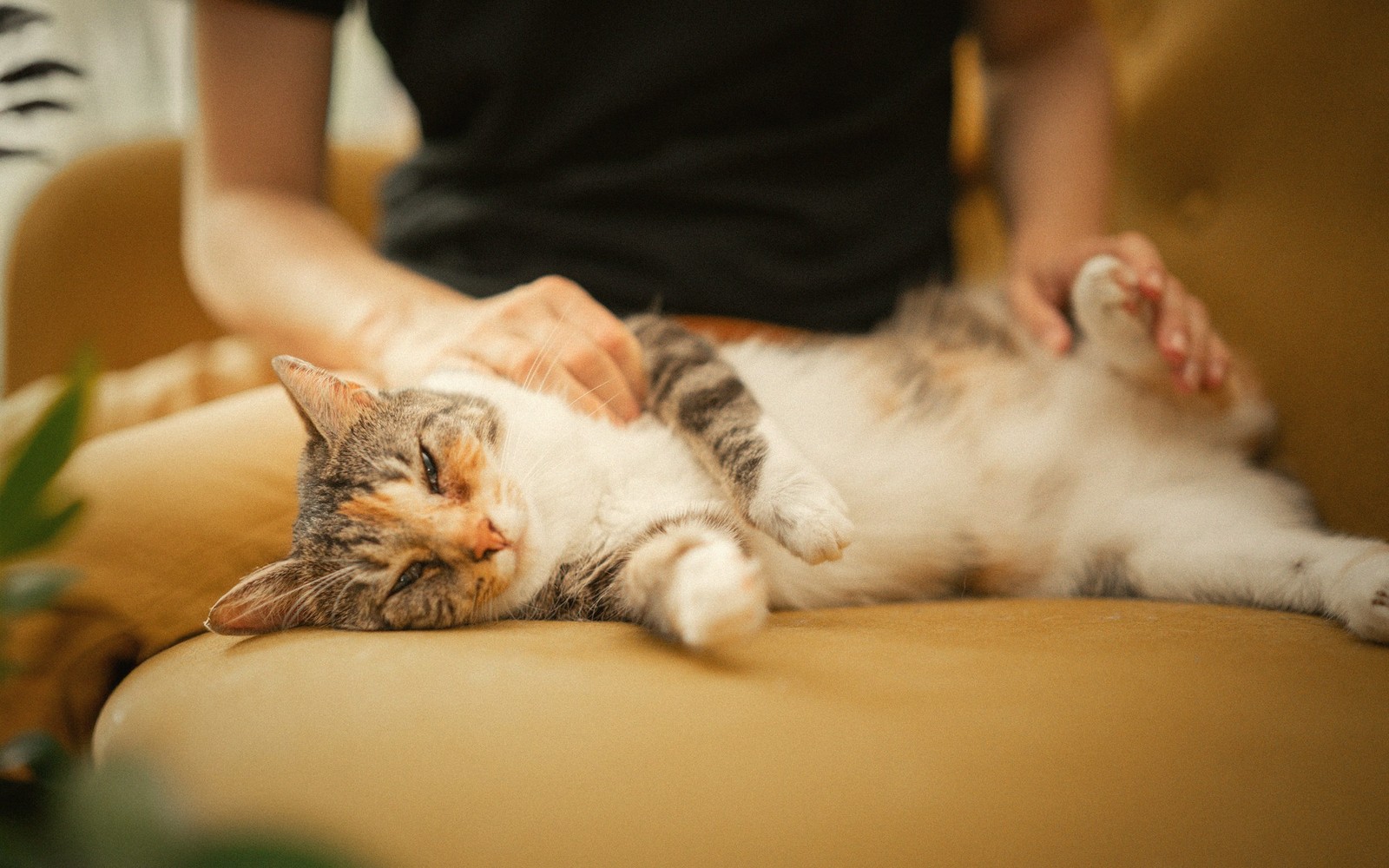
01Ten minutes on the sofa that could save you a bigger vet bill
Your vet sees your pet twice a year, maybe. You see them every day — which means you're the one most likely to catch a lump, a limp, or a change that matters. A quick hands-on check once a week, while you're both already settled on the sofa, takes about ten minutes and costs nothing. Here's how to do it.
02Work from nose to tail
Start at the head. Look at the eyes: they should be bright, symmetrical, and clear — no persistent discharge, no redness at the corners, no visible third eyelid creeping in from the side. Then the ears: sniff them gently (yes, really). A faint, neutral smell is fine; a yeasty, sour, or waxy odour is a flag worth acting on. Lift the lip and check the gums — healthy gums are salmon-pink and moist. Pale, white, yellow, or bright red gums are always worth a vet call, and sooner rather than later.
Run your hands slowly along the neck and shoulders, then down the spine and over the ribcage. You should be able to feel the ribs without pressing hard, but not see them clearly — that middle ground is what a healthy weight feels like. While you're there, feel for any lumps, bumps, or tender spots your pet didn't have last week. New swellings don't automatically mean the worst, but they do mean "note it, watch it, mention it." If something has grown or changed shape in a fortnight, that's your vet visit prompt.
Check the belly — gently. A soft, relaxed abdomen is normal; a hard, distended, or painful one is not. Move to the paws: press between the toes to feel for swelling, check the pads for cracks, and look at the nails. Overgrown nails catch on carpets and can curl into the pad if ignored. Finally, lift the tail and take a quick look — scooting, redness, or a dirty coat underneath can indicate anything from full anal glands to a basic hygiene issue that's easy to fix.
03What to do with what you find
Keep a simple mental (or actual) note of what's normal for your animal — their usual weight, their baseline ear smell, that benign little wart near the shoulder that's been there for years. Knowing normal is how you recognise abnormal. Anything that's new, worsening, or worrying belongs on our guide to signs worth a vet visit. The couch check won't replace your vet; it just makes sure you arrive with the right questions.