01What puppies actually need from food
A puppy is not a small adult dog. For the first year of life — longer for large breeds — a puppy's body is building bone, muscle, and organ tissue at a rate that demands genuinely different nutrition from the food in the bowl. Get this window right and you set a dog up for a much healthier adult life; get it wrong and you can cause lasting joint and growth problems, even with the best intentions.
A puppy is not a small adult dog.
The single most important thing to look for on any puppy food is the AAFCO (Association of American Feed Control Officials) nutritional adequacy statement1. It should read "formulated to meet the nutritional levels established by AAFCO for growth" or "all life stages." If it says "maintenance," put it back on the shelf — that product isn't designed for a growing dog. Understanding what you're actually reading on the bag matters more than the brand name, and it's worth spending ten minutes learning how to read a pet-food label before you shop.
Protein is the headline nutrient. Puppies need it in higher concentrations than adult dogs to support rapid muscle development, and it should come from a named animal source — chicken, beef, lamb, salmon — listed as the first ingredient. Vague terms like "meat meal" or "animal digest" are a step down in quality. Fat matters too: it fuels all that frantic energy and supports brain development, especially in the first months. Look for a named fat source, such as chicken fat or salmon oil. Carbohydrates provide energy and fibre; what you're avoiding here is a food where cheap grain or starchy filler is doing the heavy lifting where protein should be.
Calcium and phosphorus deserve a special mention for large-breed puppies. Breeds that will mature above roughly 50–55 lb (around 23–25 kg) need calcium and phosphorus kept within a tighter range during growth — too much calcium in particular is linked to skeletal abnormalities. This is why "large breed puppy" formulas exist and why they're not just marketing: the mineral ratios genuinely differ. If you have a Great Dane, Labrador, or similar, buy a food specifically labelled for large-breed puppies, not a general puppy formula.
02Wet, dry, or both — and how much, how often
Both wet and dry food can meet a puppy's nutritional needs if they carry that AAFCO growth statement. Dry kibble is calorie-dense, easier to measure, and better for early dental habits. Wet food is higher in moisture, often more palatable for reluctant eaters, and can be useful for very young puppies still getting used to solid food. Many owners do a combination: a small amount of wet food mixed into kibble, which tends to encourage eating without turning every meal into a negotiation. The real trade-offs between wet and dry food are worth knowing before you commit to one approach.
| Dry kibble | Wet food | |
|---|---|---|
| Energy | Calorie-dense and easy to measure | Higher moisture, lighter per gram |
| Teeth | Better for early dental habits | No crunch benefit |
| Best for | Everyday meals and training routines | Reluctant eaters and very young puppies |
Meal frequency matters as much as what's in the bowl. Young puppies have small stomachs and unstable blood sugar, so feeding little and often keeps them steady. A rough guide:
- 8–12 weeksfour meals a day
- 3–6 monthsthree meals a day
- 6–12 monthstwo meals a day
- 12 months and over (small/medium breeds)transition to adult food; large breeds often stay on puppy food until 18–24 months
Portion size should follow the feeding guide on the packaging as a starting point, then be adjusted to the dog in front of you. Ribs should be easy to feel with light fingertip pressure but not visible; a visible waist from above is a good sign. If you're unsure whether your puppy is growing at the right rate, your vet can plot their weight on a growth chart at routine appointments — that's exactly what those early visits are for.
03Transitioning food and what to avoid
Puppies often go home with a sample or a recommendation from their breeder. Whatever food you plan to use long-term, transition slowly: mix roughly 25% new food with 75% old for two to three days, shift to 50/50, then 75/25, and finally 100% new food over about a week. Rushing this is the number-one cause of the loose stools that new puppy owners tend to blame on the food itself.
A few things that belong nowhere near a puppy's bowl: grapes and raisins (toxic to dogs, with no safe known dose), onions and garlic in any form, macadamia nuts, chocolate, xylitol (a sweetener found in some peanut butters and sugar-free foods)2, and cooked bones, which splinter. Raw bones are a separate and ongoing debate among vets and owners; if you go that route, do your homework and talk to your vet first.
Treats count toward daily calories — easily 10% of intake if you're training hard in those first weeks, which you should be. Factor them into the day's total rather than adding them on top, or you'll hit the vet scales sooner than you'd like. Keep treats small: a pea-sized piece of chicken is as rewarding to a puppy nose as a chunk three times the size.
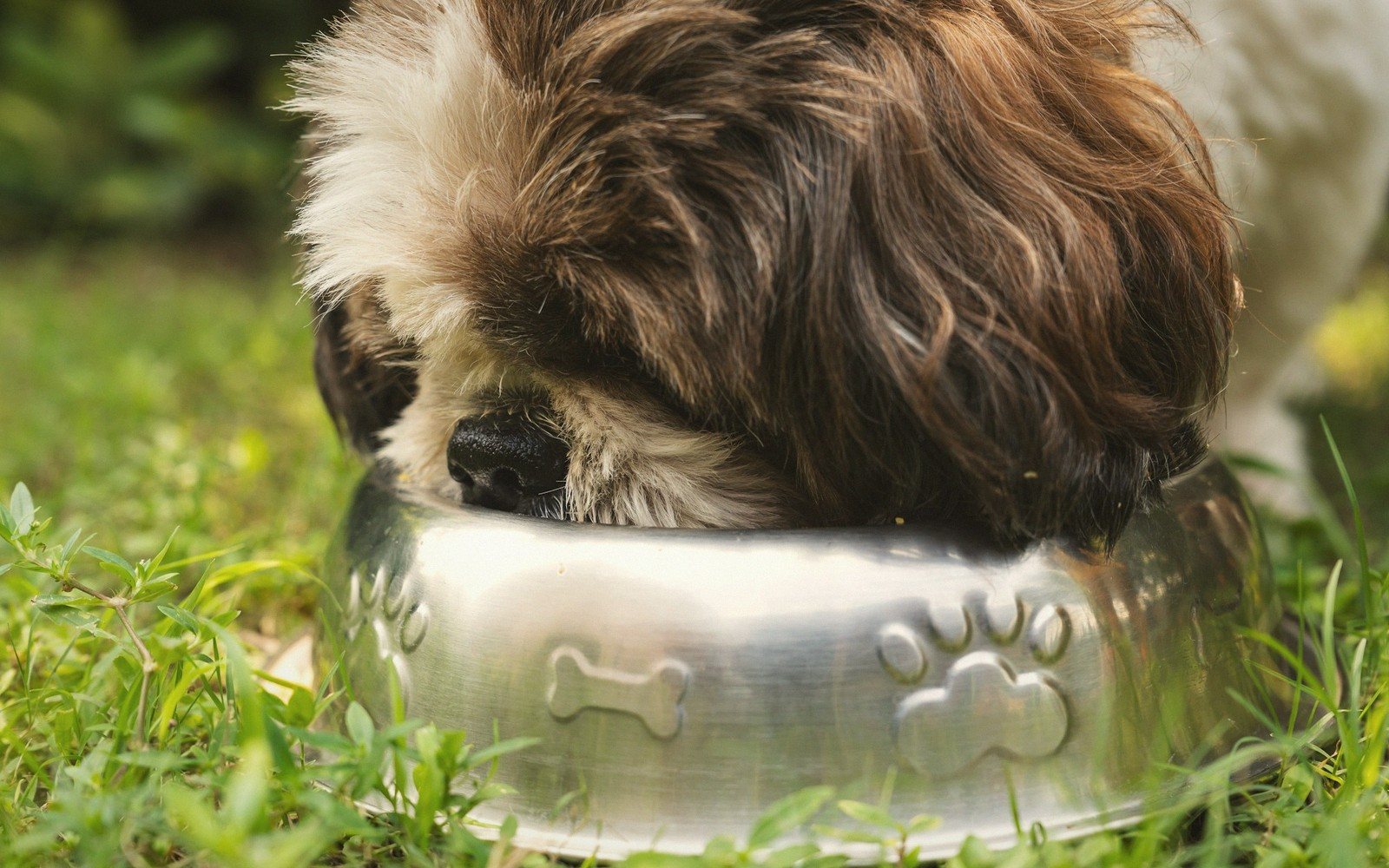
When the bowl goes down, give your puppy fifteen to twenty minutes to eat, then pick it up. Free-feeding — leaving food out all day —3 makes it much harder to spot early signs of illness and nearly impossible to manage weight. A puppy who knows meals appear and disappear on a schedule tends to eat more reliably and settle more quickly, which makes everyone's life easier.
Notes from the keeper
- AAFCO is the US body that sets pet-food nutrition standards — that one label line is worth more than the brand name. ↩
- Xylitol hides in surprising places — check the jar before you share peanut butter. ↩
- Free-feeding also makes it near-impossible to spot the first day a pet goes off food — often the earliest sign of illness. ↩