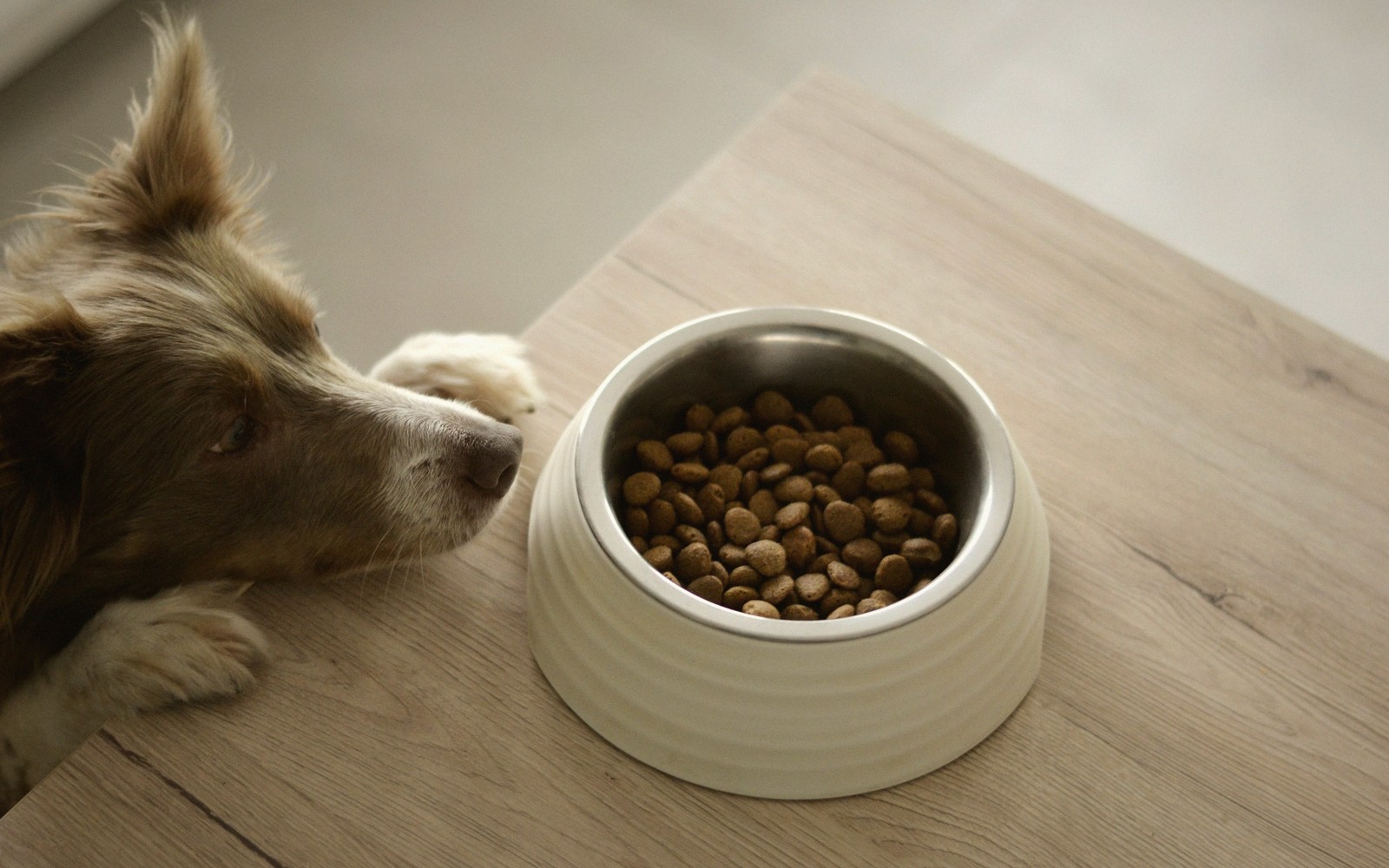
The face works every time — the trick is knowing when to say yes
01The math behind the meltdown
That look — chin on your knee, eyes like saucers — is not manipulation. It is just a dog or cat being brilliantly, biologically efficient. They have learned that the face produces food. Your job is to enjoy the face without letting it quietly rewrite their diet.
Portions are where most pet weight problems begin, and they begin small. A single extra biscuit a day is negligible to you; scaled to a ten-kilogram dog's caloric needs, it adds up to something the vet will notice within a year. The feeding guide on the back of the bag is a starting point, not a contract — adjust for your individual animal's age, activity level, and whether they are spayed or neutered, which typically lowers caloric need. Weigh the food, at least occasionally. A kitchen scale costs very little and removes the guesswork that a loosely filled cup quietly multiplies.
Treats deserve their own accounting. A common rule of thumb — and a sensible one — is that treats should make up no more than ten percent of your pet's daily calories. So if you are training hard one week, pull a little from the meal. Small pieces go as far as large ones in a dog's mind; they care about frequency, not portion. Break training treats in half. Your dog will not notice; your vet will, eventually, in the best way.
Cats present a different puzzle: they graze if you let them, or they inhale everything and yowl for more. Neither extreme is ideal. Measured meals twice a day suit most adult cats, with treat calories folded into the total. If you are reading a pet-food label and feeling uncertain what the calorie count actually means, that uncertainty is worth resolving before the routine gets set.
The begging face is not going anywhere. Feed it a little information instead of a little extra kibble, and everyone wins — including the dog.