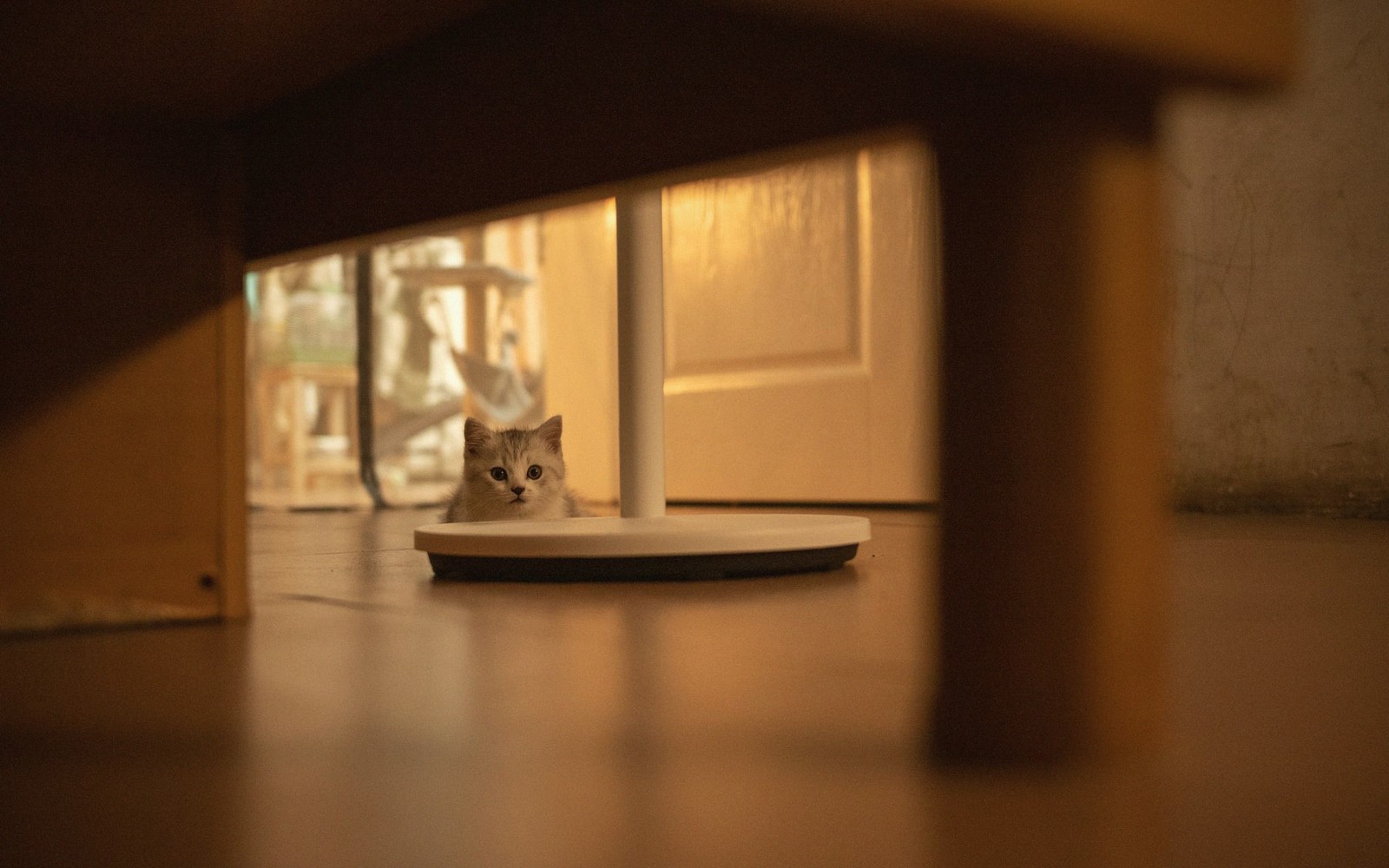
01Set the stage before you make a move
Bringing home a feral or semi-feral cat is nothing like adopting a sociable rescue who'll be on your lap by Tuesday. These animals have learned, quite reasonably, that people mean danger. Earning their trust is slow work — and the biggest mistake new owners make is rushing it.
If you need to trap a feral kitten, rent or borrow a humane trap from a local feed store or animal rescue rather than trying to catch the cat by hand. Once you have the cat secured, treat for fleas immediately using a product labelled safe for kittens — feral cats almost always carry them, and an infestation spreads fast in a home. Then get to a vet. A basic health check, vaccination schedule and, when the kitten is old and heavy enough, spay or neuter surgery are all non-negotiable. Your vet will advise on timing based on the individual animal's weight and condition; don't try to guess. An early positive experience with handling — even an uncomfortable one — also begins the process of teaching the cat that being touched by humans doesn't always end in disaster.
02Give the cat a room of its own
Before the cat arrives, set up a single small room — a spare bedroom, a home office, even a large bathroom works well. Put in a litter box, a bed or folded blankets, food, water and a few toys. Close the door, and then, for a while, largely leave the cat alone.
This sounds counterintuitive. You want to bond; ignoring the cat feels wrong. But for an animal that has spent its life reading threats, a confined space with no pressure to interact is genuinely calming. The room becomes its territory first, which matters enormously to cats. It can investigate every corner, learn the smells, decide where it feels safe — all without a large, unpredictable human looming over it.
When you do enter the room, move slowly and keep low. Sit on the floor rather than standing. Don't stare directly at the cat; in feline body language, a hard sustained gaze is a challenge, not a greeting. Expect hissing, hiding or a flat refusal to acknowledge you. All of that is normal. Scratches in the early days are also normal — try not to react sharply when they happen, because a sudden noise or flinch resets the trust counter.
03Let the cat come to you
One of the most effective techniques for socialising a shy cat costs nothing: sit in the room and read aloud. A quiet, steady human voice — not directed at the cat, not coaxing or cajoling — lets the animal habituate to the sound of people without any social demand attached. It works. Many experienced feral-cat carers swear by it, and it has the side benefit of getting through your reading pile.
Resist the urge to reach out and touch the cat the first time it ventures close. Let it sniff your hand at its own pace. The cat is doing the investigating here; your job is to be still and boring. Treats left near you rather than offered from your hand are useful at this stage — the cat learns that being in your vicinity has pleasant consequences, on its own terms.
04Introduce play on the cat's timetable
Once the cat is reliably coming out when you're in the room, introduce a wand toy — a rod with a feathery or crinkly attachment on a string. This is the best tool in the box for a skittish cat, because it lets the two of you interact without direct physical contact. You're no longer the scary thing; you're the person who controls the interesting flying thing. Move it slowly at first, let the cat watch, and don't force engagement. Most cats, no matter how wary, eventually can't resist a well-worked feather wand.
From here, progress happens naturally. The cat that once flattened itself behind the radiator will start waiting for you near the door. Physical contact — a brief stroke along the back, then the head — follows when the cat initiates it. Keep sessions short and always end on a calm note, never when the cat is tense.
The whole process can take days, weeks or months depending on the individual animal's history. Some cats settle in a fortnight; others take the better part of a year before they're fully relaxed around people. Go at their pace, not yours, and you'll get there.