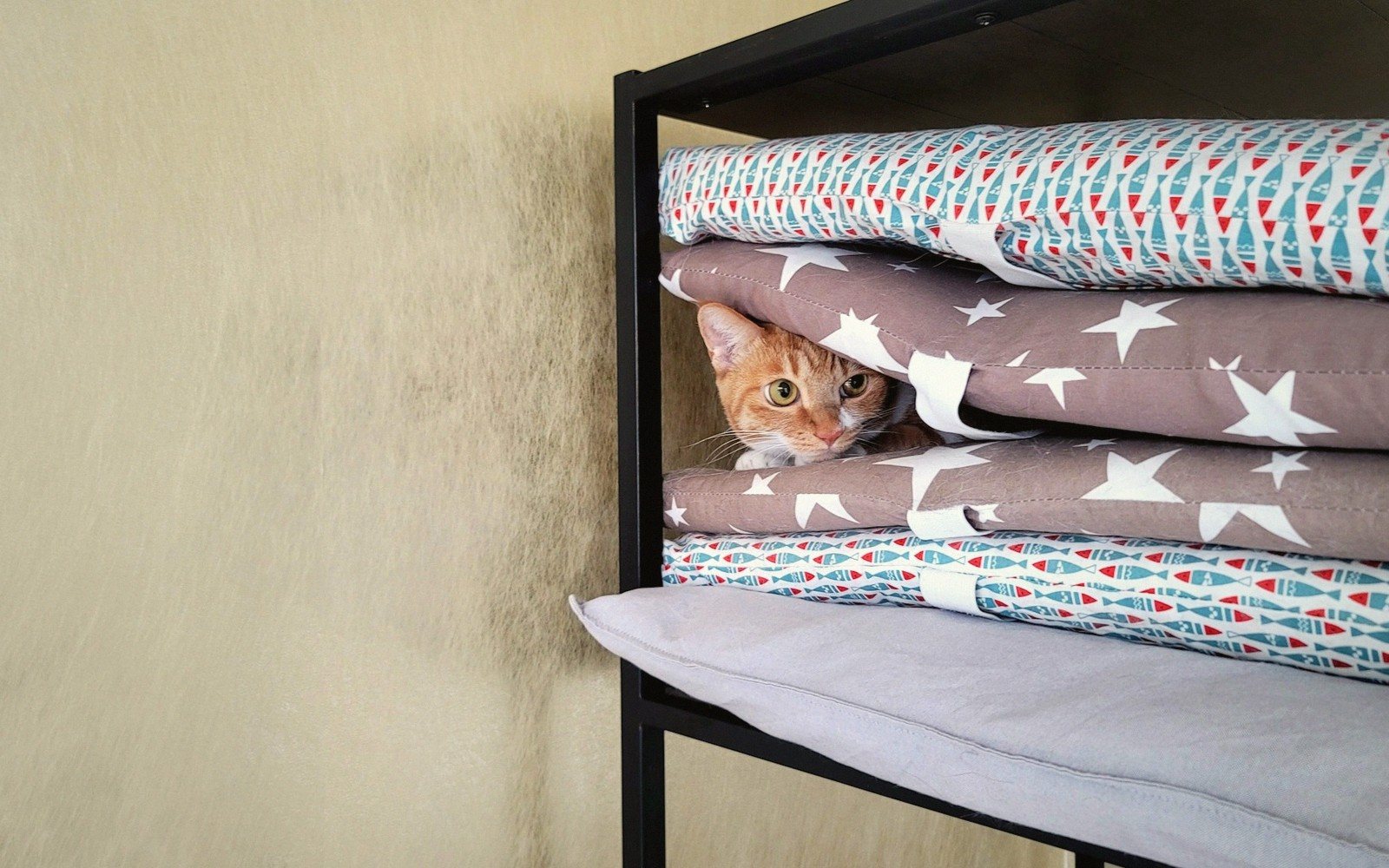
01Give your cat a vertical world
Cats are natural climbers, and a flat that offers only floor space is, from their perspective, oddly impoverished. Height means safety, vantage points, and — crucially — a way to get away from a noisy toddler or an overfamiliar dog without anyone having to lose face. You don't need an architect. You need a few well-placed additions.
Cat wall shelves have come a long way from the carpet-covered platforms of the 1990s. Solid-wood floating shelves with a lip edge work perfectly and cost little; stagger them in a rising diagonal so a cat can move easily between levels. Spacing around 30–35 cm vertically gives most cats a comfortable hop. Add a strip of sisal mat or a piece of non-slip rug between levels and you've made something genuinely inviting.
Window seats reward almost any investment. A padded perch that brackets onto a windowsill keeps a cat entertained for hours — birds, squirrels, the neighbour's routine, the weather. Orient it toward east or south if you can; a cat in a warm patch of morning sun is one of the most content creatures on the planet. If your windows have deep sills already, a folded blanket is all you need.
Think about flow as well as individual spots. A single high shelf is a dead end; a route — shelf to bookcase to window perch and back — is a territory. Cats feel more secure when they can move between elevated spots without touching the floor, so connect the dots where your room layout allows.
One practical note: fix every shelf to a stud or use proper wall anchors. A 5 kg cat landing at speed applies real force, and a shelf that comes away from the wall is dangerous. Check fixings every few months. The rest is just watching them use it, which, honestly, never gets old.