01What you're really up against
Dogs are hard on floors. Claws score soft surfaces, damp paws drive moisture into seams, and the odd indoor accident — especially with a young or elderly dog — can ruin anything that isn't genuinely waterproof. Add daily skidding and the fine grit that hitches a ride on every coat, and your flooring takes a slow, steady beating. Before you renovate, it helps to know what each material can and can't handle.
02The contenders, honestly assessed
Vinyl is the workhorse choice for most dog households, and for good reason. Modern luxury vinyl plank (LVP) is fully waterproof through its entire thickness — not just surface-treated — which means a puddle left overnight won't warp the boards. It's soft underfoot, quieter than tile, genuinely easy to clean, and the least expensive option on this list. Wear-layer thickness varies: for a dog household, look for at least 12 mil (0.3 mm) on the wear layer; 20 mil if you have a large or active breed. The one limitation is that it can be gouged by very sharp nails on a rough surface — keep those claws trimmed and you'll rarely see a mark.
Linoleum is vinyl's older, greener cousin. Made from linseed oil, cork dust, wood flour and natural pigments, it's a genuinely natural product, and that composition makes it naturally antibacterial and hypoallergenic — a real plus if anyone in the house has allergies. It's slightly softer and quieter than vinyl, water-resistant (though not fully waterproof at the seams, so mop spills quickly), and very durable with proper care. It costs more than vinyl but tends to outlast it, often by decades. Worth the premium if you want an eco-friendly floor that'll still look good when the puppy is grey-muzzled.
Laminate scores extremely well for scratch resistance — its hard melamine-resin wear layer shrugs off claws that would leave marks in almost anything else. For a dog owner, that's a serious advantage. The catch is moisture: standard laminate has a wood-fibre core that swells when wet, and it does not forgive puddles or repeated damp mopping. Some newer waterproof laminate products address this with a plastic core, but read the specs carefully before you buy. Clean dry, wipe spills fast, and laminate earns its place.
Cork is the surprise on this list. It's naturally antibacterial, hypoallergenic, warm, quiet, and has a beautiful finish that reads as close to hardwood. It's also cushioned, which is kinder on older dogs' joints — and on yours. The significant downside is scratch resistance: cork is soft, and dog claws will mark it unless you keep nails very short and reseal the surface every few years. Think of it as a premium, high-maintenance choice rather than a heavy-traffic workhorse.
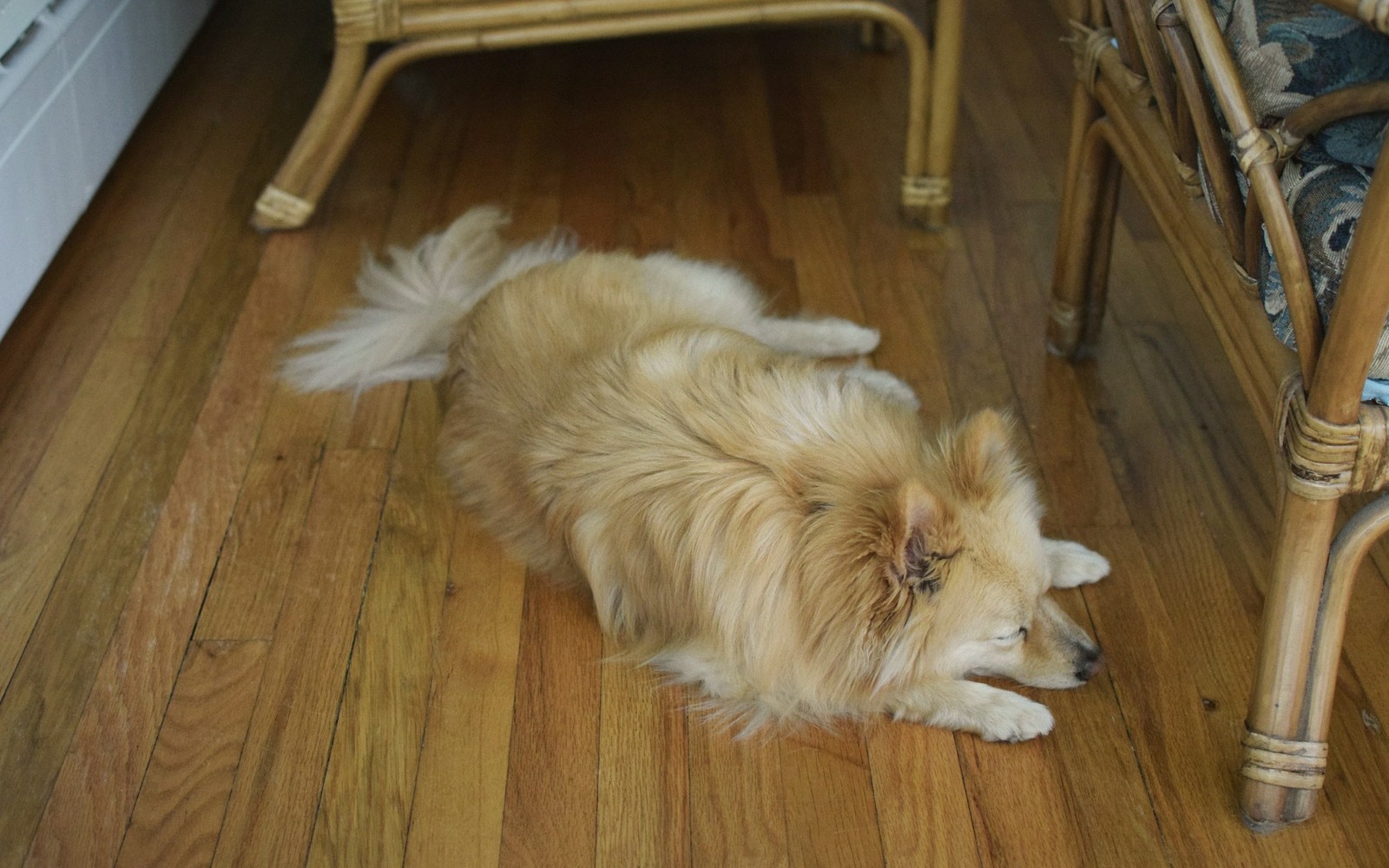
Hardwood deserves an honest word. It looks beautiful, adds value to a home, and a proper polyurethane finish is tougher than its reputation suggests. But hardwood does scratch, especially softer species like pine or cherry. If you want hardwood with a dog, choose a harder species — white oak and maple sit near the top of the Janka hardness scale — go for a hand-scraped or wire-brushed finish that hides small marks, and accept that over time the floor will develop character rather than stay pristine. Refinishing every several years restores it. It's the highest-cost option, but also the longest-lived if you look after it.
03A quick rule for choosing
Match the floor to your actual dog and your actual life. A house-trained adult Labrador is a very different proposition from a boisterous young Border Collie with muddy paws and an appetite for mischief. For messy, wet, high-traffic situations, vinyl or waterproof laminate wins on practicality. For a calmer household that wants something beautiful and sustainable, linoleum or cork earns a second look. Hardwood rewards patience and the occasional refinish. Whatever you choose, trim those nails regularly — no flooring is a substitute for keeping pets fit and their claws in check.